
Urban Homesteading: The Complete Guide for City and Suburban Dwellers
Starting a homestead in the city or suburbs raises more questions than most people expect.
The homesteading dream doesn’t require acres of rural land. That’s the most important thing to understand before you read another word. Millions of people are growing food in apartment balcony containers, raising chickens in urban backyards, fermenting vegetables in city kitchens, and producing meaningful income from their modest suburban lots. Urban homesteading isn’t a consolation prize for those who can’t afford land — it’s a legitimate, rewarding path to self-sufficiency that happens to be accessible right now, wherever you live. Understanding urban homesteading guide helps you make better decisions.
This guide is for city dwellers, suburban residents, renters, and anyone who has ever felt the pull toward a more self-reliant life but doesn’t know where to start given their circumstances. You’ll find practical guidance on food production, small livestock, preservation, resource independence, income opportunities, legal considerations, and community building — all adapted for the realities of urban and suburban life.
What’s Urban Homesteading (and What It Isn’t)
Urban homesteading is the application of traditional homestead values — self-sufficiency, food production, skills-based living — to an urban or suburban context. It’s not about pretending you’re on a farm. It’s about asking the question: “Given where I’m right now, what can I produce and provide for myself?” and then actually doing it.
What urban homesteading is:
- Growing food in the space you’ve — balconies, patios, front yards, community garden plots
- Cooking from scratch and preserving seasonal abundance
- Reducing dependence on commercial systems for food, energy, and water
- Building practical skills — fermentation, sewing, basic repair, gardening — that add real value to your life
- Creating income streams from homestead activities
- Building community with like-minded neighbors
What urban homesteading isn’t:
- All-or-nothing. You don’t have to do everything at once or achieve total self-sufficiency.
- Rural life in the city. It’s its own distinct practice, not a compromise version of something better.
- Only for people with big yards. Container gardens, vertical systems, and community plots make food production accessible to virtually anyone.
- Legally restricted in most places (though local rules apply — more on that below).
The Jules Dervaes family in Pasadena, California — often cited as the first urban homesteaders — produced more than 6,000 pounds of food annually on a tenth of an acre urban lot. That story has inspired a global movement because it demonstrated, concretely, what’s possible in very limited space.
Growing Food in Small Spaces: Containers, Raised Beds, Vertical Gardens
Food production in small spaces requires different strategies than traditional row cropping. You’re optimizing for yield per square foot rather than yield per acre, and that changes everything from variety selection to spacing to watering methods.
Container Gardening
Containers are the most flexible urban growing system — they can go anywhere (balconies, rooftops, patios, even indoors near windows) and can be moved seasonally. The keys to successful container gardening:
- Size matters: Bigger containers produce better results. A 5-gallon container is the minimum for most vegetables. Tomatoes need at least 10–15 gallons. Herbs do well in smaller pots.
- Drainage is critical: Containers must have drainage holes. Standing water causes root rot.
- Watering frequency increases: Containers dry out faster than in-ground soil, especially in summer. Plan to water daily or use self-watering containers.
- Use quality potting mix: Not garden soil — it compacts in containers and doesn’t drain properly. Use a quality potting mix amended with compost.
- Best container crops: Tomatoes (cherry varieties are most productive), peppers, lettuce and greens, herbs, cucumbers (with a trellis), radishes, green onions, and strawberries.
Raised Beds
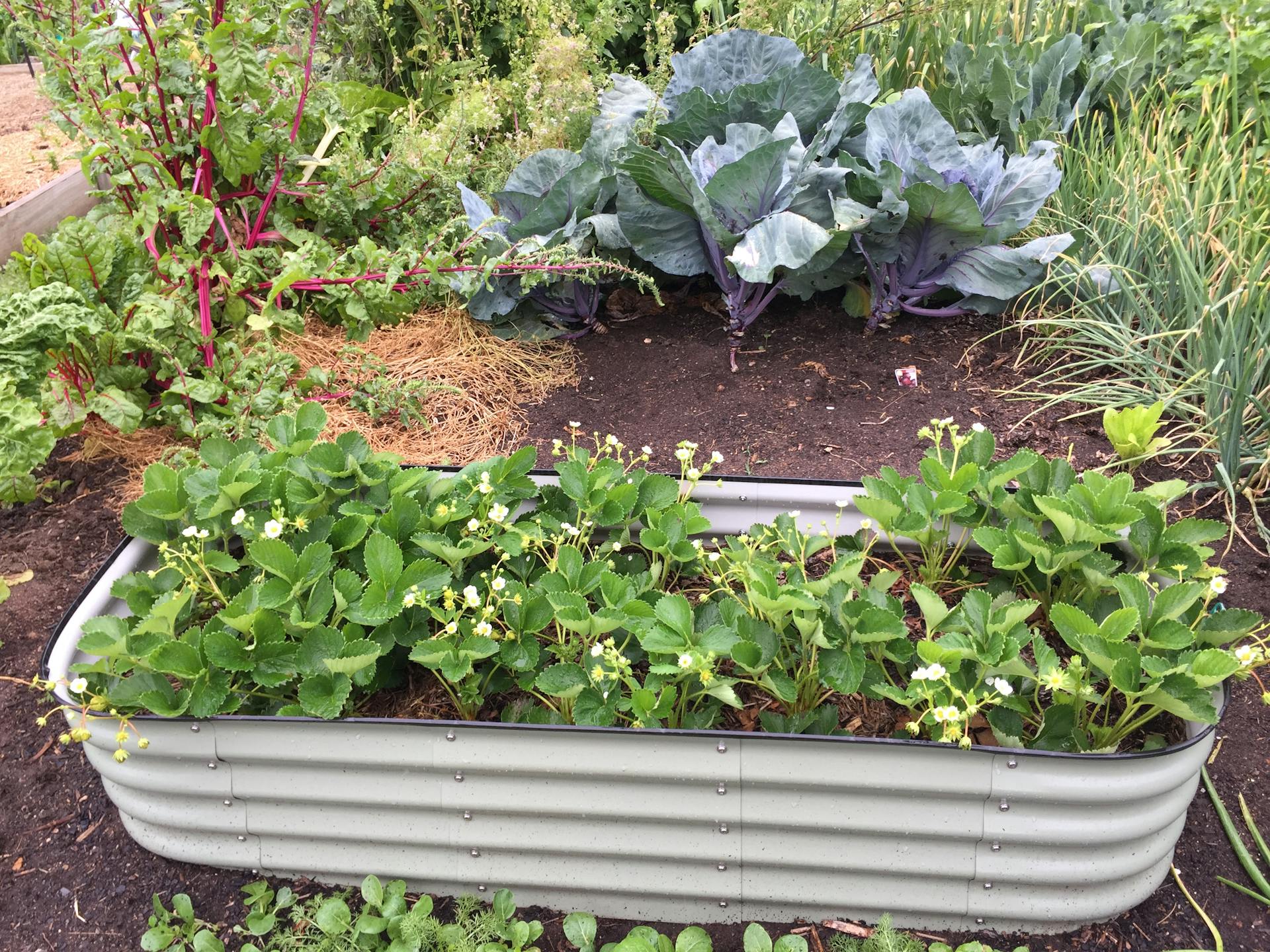
If you’ve any ground space — even a small patio — raised beds offer significant advantages: excellent drainage, warmer soil temperatures, reduced compaction, and the ability to customize your growing medium. A single 4×8 foot raised bed can produce an impressive quantity of vegetables when intensively planted.
- Fill with a mix of topsoil, compost, and drainage material (perlite or coarse sand).
- Use intensive planting techniques — no wasted space, staggered succession planting throughout the season.
- Add a trellis along the north edge to grow vertical crops without shading lower plants.
- Mulch heavily to retain moisture and reduce watering needs.
Vertical Gardening
Vertical growing multiplies your productive square footage by using wall space, fences, trellises, and tower systems. Especially valuable for urban homesteaders with limited ground space.
- Trellised crops: Beans, peas, cucumbers, small melons, and cherry tomatoes all grow vertically with minimal footprint.
- Pocket planters: Felt or fabric wall-mounted systems work well for strawberries, herbs, and lettuce.
- Tower gardens: Hydroponic or soil-based vertical tower systems (like Tower Garden or stackable planters) can grow 20–30 plants in 2–4 square feet.
- Fence and wall gardens: A south-facing fence is prime real estate. Train espaliered fruit trees or climbing vegetables along it.
Indoor Growing
South-facing windows can support herbs, lettuce, and microgreens year-round. LED grow lights make it possible to extend this to almost any indoor space. Microgreens in particular offer exceptional nutritional density (up to 40x more nutrients than the mature plant) from a few inches of tray space and harvest in 7–14 days.
Urban Chickens and Small Livestock
Chickens are the most common urban livestock and for good reason. A small backyard flock of 3–6 hens provides eggs, pest control, fertilizer for your garden, and — for many urban homesteaders — a meaningful connection to the food chain. Many cities now allow backyard chickens; check your local ordinances before getting started.
Getting Started with Urban Chickens
- Check local ordinances first. Many cities allow 3–6 hens, prohibit roosters, and have setback requirements for coops.
- Start with established pullets. Buying 4–6 month old hens (just about to lay) is easier for beginners than raising chicks.
- Choose docile, productive breeds for urban settings: Orpingtons, Rhode Island Reds, Plymouth Rocks, and Australorps are all friendly, cold-hardy, and excellent layers.
- Plan for predator protection: Urban areas have raccoons, possums, foxes, and hawks. Your coop must be secure at night with solid locks and hardware cloth (not chicken wire, which can be torn).
- Expect 4–6 eggs per hen per week during peak laying season (spring/summer). Production decreases in winter without supplemental lighting.
Other Urban Livestock Options
- Ducks: Excellent egg layers (often outperform chickens), quieter than roosters, and more weather-tolerant. Require water access but produce less dust than chickens.
- Quail: Extremely compact — a quail tractor takes up about 2 square feet per bird. Produces small but nutritious eggs, and is legal in many places where chickens aren’t.
- Rabbits: Can be raised in very small spaces, produce meat and fiber (for wool breeds), and their manure is one of the best garden fertilizers available.
- Bees: Urban beekeeping is legal and increasingly common in cities worldwide. A single hive requires minimal space, provides pollination for your garden, and produces honey, beeswax, and propolis.
Preserving, Fermenting, and Cooking From Scratch
In the urban homesteader’s kitchen — often the busiest room in the house — garden harvests get preserved, grains get fermented, bones get simmered into broth, and meals get made from whole ingredients rather than processed packages.
Even without a large garden, learning to cook from scratch dramatically reduces food costs, improves nutrition, and builds practical skills. Combine it with seasonal buying (bulk tomatoes in August, winter squash in October) and you can preserve significant quantities even without growing your own.
Core kitchen skills for urban homesteaders:
- Lacto-fermentation: Sauerkraut, kimchi, pickles, and kefir require only a jar and salt. No special equipment, minimal cost, enormous benefit.
- Water bath canning: Jams, pickles, and tomato products. An 8-quart stockpot and a bag of mason jars gets you started.
- Dehydrating: A basic dehydrator under $60 opens up an entire world of preserved herbs, fruits, vegetables, and jerky.
- Bread and fermented grains: Sourdough, whole grain breads, and fermented porridges are both more nutritious and more economical than commercial alternatives.
- Nose-to-tail cooking: Using whole animals or using every part of a chicken (including feet and bones for stock) is both economical and sustainable.
For a deep dive into preservation methods, see our Complete Guide to Homestead Food Preservation.
Reducing Dependence: Energy, Water, and Waste
Homesteading in the city extends beyond food. Reducing dependence on municipal systems for energy, water, and waste management is both a financial benefit and a step toward genuine resilience.
Energy Independence
- Solar: Rooftop solar is now accessible for homeowners and many renters (via community solar programs). Even a portable solar panel and battery bank (useful for outages) is a meaningful step toward energy resilience.
- Efficiency first: Before generating energy, reduce consumption. LED lighting, efficient appliances, and thermal improvements to your home reduce bills immediately.
- Cooking efficiency: A pressure cooker reduces cooking time (and gas/electricity use) by 70%. Batch cooking and deliberate meal planning reduce energy waste.
Water Conservation and Harvesting

- Rainwater harvesting: Even a simple rain barrel (50 gallons) connected to a downspout can collect significant water for garden use. Check local regulations — some states restrict or regulate collection.
- Greywater reuse: Laundry and sink water can be legally redirected to garden irrigation in many jurisdictions. Simple greywater systems require minimal investment.
- Drip irrigation: Delivers water precisely to plant roots, reducing waste by 30–50% compared to overhead watering.
Waste Reduction
- Composting: Even apartment dwellers can compost with a small bokashi system (ferments kitchen scraps) or vermicomposting (worms in a bin) that takes up 2 square feet under a sink. This produces rich fertilizer for containers and eliminates food waste from landfill.
- Repairing instead of replacing: Learning basic sewing, appliance repair, and tool maintenance keeps items out of landfills and keeps money in your pocket.
- Buying secondhand: For clothes, furniture, tools, and equipment, secondhand is both the thrifty and sustainable choice.
Making Income from Your Urban Homestead
Your urban homestead can be a net positive for your household income, not just an expense. Many urban homesteaders generate meaningful supplemental income — and some have turned their urban homesteads into full-time livelihoods.
Food-Based Income Streams
- Selling eggs: Fresh backyard eggs command $5–$8 per dozen in most urban markets. Even a small flock can offset feed costs and generate profit.
- Cottage food production: Jams, baked goods, fermented foods, and dried herbs can be sold at farmers markets, online, or directly to neighbors in most states under cottage food laws.
- Microgreens: One of the most profitable crops per square foot available. A small home setup can generate $500–$2,000/month selling to restaurants and individuals.
- Honey: Urban honey often commands premium prices due to its diverse floral sources. A productive hive can produce 60–100+ pounds of honey annually.
- Specialty herbs and plants: Selling starts, herbs, or unusual varieties at plant swaps and farmers markets.
Knowledge-Based Income Streams
- Teaching: Classes on fermentation, canning, backyard chickens, or container gardening sell well in urban areas where these skills are uncommon.
- Blogging and content creation: Documenting your urban homestead journey builds audience and enables income through advertising, affiliate marketing, and digital product sales.
- Consulting: Helping neighbors set up chicken coops, design container gardens, or start composting systems.
The Legal Side: Zoning, HOAs, and Permits
Legal frameworks vary significantly by location for urban homesteaders. that varies significantly by location. Before investing time and money into specific projects, understand what’s permitted where you live.
Common Legal Considerations
- Chickens and livestock: Most cities now allow backyard hens (typically 3–6); roosters are usually prohibited. Goats and rabbits are allowed in some jurisdictions. Always check your specific city ordinance.
- Food sales: Cottage food laws vary significantly by state. Some states allow broad direct-to-consumer sales with minimal licensing; others require commercial kitchen certification. Know your state’s rules before selling.
- Rainwater collection: Legal in most states, restricted in some (historically Western water law states), encouraged in others (tax rebates in some jurisdictions).
- Front yard gardens: Some municipalities restrict “vegetable gardens” in front yards; others have no such restrictions. HOA rules may also apply.
- Greywater systems: Regulated differently by state. Some states allow simple systems without permits; others require permits and specific designs.
- Bees: Increasingly allowed in urban areas. Most ordinances require setback distances from property lines and notification of neighbors.
Dealing with HOAs
HOA restrictions can limit urban homesteading options significantly. However, many HOA rules have exceptions or can be amended. Strategies:
- Read your CC&Rs carefully — what’s actually prohibited vs. What you’ve assumed is prohibited.
- Start with changes that are clearly not restricted (container gardens, indoor growing, composting in a contained bin).
- Engage with your HOA board — many homesteading activities are framed differently when presented as “gardening” or “composting” rather than “urban farming.”
- Connect with neighbors who share your interests and work together to propose rule modifications.
Building an Urban Homesteading Community
Practicing in community makes homesteading more sustainable and enjoyable — and often more productive — when practiced in community. The urban homesteading community is thriving in most cities, and connecting with it opens up resources, knowledge, and opportunities that would be difficult to access alone.
Ways to Connect
- Local seed libraries and plant swaps: Most cities have at least one. These aren’t just about free seeds — they’re meeting places for people who grow food.
- Community gardens: Even if you’ve your own growing space, participating in a community garden connects you with experienced growers and often provides access to tools, bulk resources, and knowledge.
- Farmers markets: Spending time at your local farmers market as a customer and eventually as a vendor connects you to the food production community in your city.
- Online communities: Local Facebook groups, Reddit communities (r/urbangardening, r/homesteading), and neighborhood apps like Nextdoor often have active homesteading subgroups.
- Local skills-sharing networks: Organizations like Repair Café, tool libraries, and timebanks connect people who want to share and learn practical skills.
The Neighborhood Homestead Network
One of the most powerful models in urban homesteading is the neighborhood network — where several households in proximity specialize in different things and share abundance. One household focuses on eggs; another on fermented foods; another has a productive fruit tree; another does beekeeping. The result is a distributed food system that provides each household with far more variety and resilience than any could achieve alone.
This model requires nothing more than getting to know your neighbors and initiating the conversation. It starts with a dozen eggs or a jar of jam left on someone’s porch.
Conclusion
It’s not a compromise. It’s a practice that develops real skills, produces real food, builds real community, and creates real resilience — regardless of how much land you’ve access to. The homestead movement has always been driven by the question “what can I do with what I’ve?” and in a city or suburb, the answer to that question is more expansive than most people realize.
Start where you’re. Grow something in a pot. Make a jar of sauerkraut. Get three chickens if your city allows it. Introduce yourself to your neighbors. These small actions compound over time into a genuinely different relationship with your food, your community, and your sense of capability.
The homestead has always been about creating something meaningful from the land you’ve. In the city, the land is small — but the opportunity isn’t.
Related posts:
- The Complete Guide to Homestead Food Preservation
- Survival Prepping for Homesteaders: The Complete Family Preparedness Guide
- Family Emergency Preparedness Guide for Homesteaders
- Old-Fashioned Jelly Recipes: 5 Tested Recipes with Canning Instructions
- Container Gardening for Beginners: How to Grow Food in Any Space
Start Your Homestead — Even From an Apartment
Container gardening, water storage, understanding land, raising your first animals. Practical steps you can take this month, wherever you live.