Family Emergency Preparedness Guide for Homesteaders
Most families don’t have a plan until they actually need one. A winter storm knocks out the grid for five days. A wildfire moves faster than expected. A water main breaks and the tap runs dry. For the average household, any of these events means hunting for food, water, warmth, and information all at once — with no plan in place.
Homesteaders think differently. Preparedness isn’t a panic purchase or a one-time event — it’s a mindset that gets built into how you live. When you’ve got a 30-day food supply, stored water, a clear evacuation plan, and kids who know their role, emergencies become inconveniences rather than crises.
What follows is the complete family emergency preparedness system: food and water storage, evacuation planning, kits for every scenario, preparing your kids, medical readiness, and how to tailor your approach to the specific threats in your area. Whether you’re just getting started or filling gaps in an existing plan, here’s your roadmap.
Why Preparedness Is a Homestead Core Skill
Emergency preparedness sometimes gets associated with doomsday thinking — bunkers, hoarding, and worst-case-scenario anxiety. That’s not what we’re talking about. Preparedness is about options. When you’ve got food stored, water secured, and a plan in place, you make decisions from a position of calm rather than desperation.
Picture what a prepared household looks like during a week-long power outage. The lights are out, but dinner’s on the table — from shelf-stable pantry staples. The family has drinking water stored. Everyone knows who to contact and where to go if they need to leave. The kids understand what’s happening and have a role to play. That household isn’t panicking — they’re inconvenienced.
For homesteaders specifically, self-reliance is already a core value. Preparedness is the emergency application of the same mindset you bring to growing food, raising animals, and building skills. You’re not preparing for a collapse — you’re building resilience for the ordinary disruptions that every family will eventually face: job loss, natural disasters, infrastructure failures, health emergencies.
The goal isn’t zero risk. It’s having enough buffer to think clearly and act deliberately when normal systems fail.
The Four Foundations of Family Preparedness
Before getting into specifics, it helps to organize preparedness around four core categories. Every plan should address all four.
Food. A 30-day supply of shelf-stable food keeps your family fed if supply chains are disrupted, you lose income, or you can’t leave home. You don’t need a warehouse — a thoughtful pantry built over time covers most scenarios.
Water. Water is the most critical and most overlooked resource. Municipal water depends on power and intact infrastructure. Stored water plus the ability to purify additional sources gives you a safety margin that food alone can’t provide.
Shelter and Warmth. In most emergencies, your home is your shelter. The ability to maintain warmth without grid power — through a wood stove, propane heater, or even strategic layering and insulation — can be what separates a manageable situation from a dangerous one.
Communication. When cell networks are down or overloaded, how do you reach family members? A battery-powered or hand-crank weather radio, a designated out-of-area contact, and a written family communication plan close this gap.
The sections below go deeper on each area and connect to detailed guides for each topic.
Food Storage — Building a 30-Day Supply
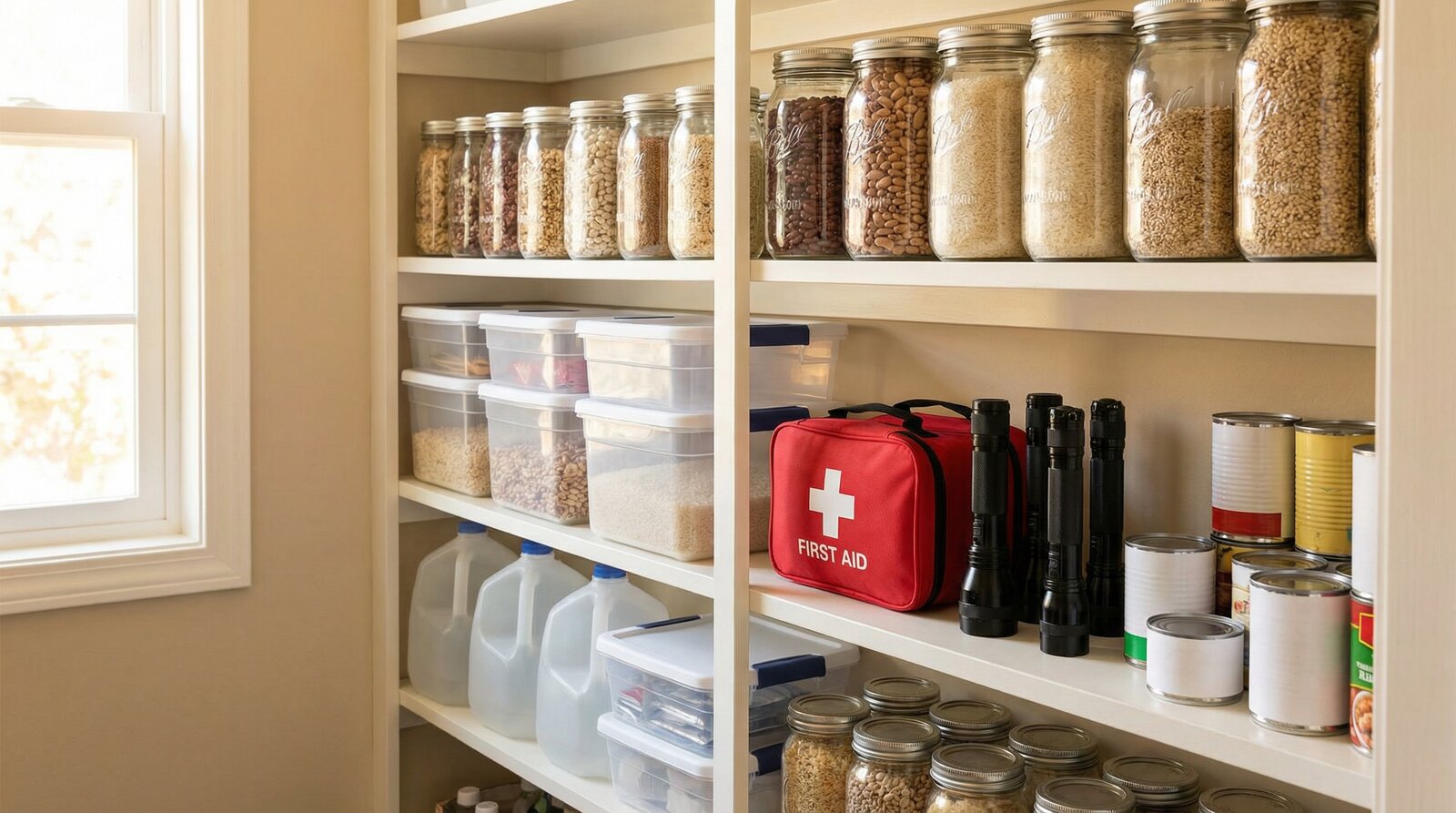
A 30-day food supply sounds like a lot, but built incrementally it becomes manageable. The core principle is straightforward — store what you eat, eat what you store, and rotate regularly.
What to store: Focus on calorie-dense, shelf-stable staples. White rice, dried beans, rolled oats, canned vegetables, canned protein (tuna, chicken, beans), cooking oil, salt, and sugar form a solid base. Add pasta, peanut butter, honey, and dried fruit for variety. For a family of four, aim for 2,000–2,500 calories per person per day.
How to rotate: Label everything with a purchase date. Use the oldest items first and replace them immediately. A simple FIFO (first in, first out) system on your pantry shelves keeps your supply fresh without waste.
Realistic cost breakdown: Building a 30-day supply doesn’t require a single large purchase. Adding $25–$50 worth of shelf-stable food per grocery trip gets you there within a few months. Buying in bulk at warehouse stores significantly reduces per-unit cost. A 30-day supply for a family of four typically costs $400–$800 total, depending on the quality and variety of food stored.
Storage considerations: Keep food in a cool, dark, dry location. Use food-grade containers or mylar bags for bulk grains and legumes. Avoid storing food near chemicals, heat sources, or in areas prone to flooding.
For a complete room-by-room checklist covering food, water, tools, and more, see the homestead emergency preparedness checklist.
Water — The Most Critical Resource
You can survive three weeks without food. Without water, you’ve got roughly three days — and that assumes you’re not doing physical work in the heat. Water is the non-negotiable foundation of any preparedness plan.
How much to store: FEMA and the Red Cross both recommend a minimum of one gallon per person per day — half a gallon for drinking and half for sanitation. For a family of four, that’s four gallons per day, or 28 gallons for a week. A 30-day supply runs to 120 gallons. Factor in pets and any additional needs (sanitation, cooking) and that number grows.
Storage options: Food-grade water containers in the 5- to 7-gallon range are manageable to move and store. Dedicated 55-gallon barrels work well in a basement or garage. A 275-gallon IBC tote is ideal for longer-term storage if you’ve got the space. Water stored in dedicated containers stays potable for six months to a year when kept out of direct sunlight; rotating annually is good practice.
Purification: If you exhaust stored water, you need a way to make additional water safe. Boiling for one minute (three minutes above 6,500 feet elevation) kills pathogens. A gravity filter like the Berkey handles larger volumes without fuel. Water purification tablets are lightweight and effective for smaller quantities. A combination of methods is more resilient than any single approach.
Secondary sources: Identify water sources near your home — streams, ponds, rain catchment. All of these require purification but give you an option if stored water runs out. In a prolonged grid-down situation, knowing how to collect and purify water from your environment is a critical skill.
For more on integrating water preparedness into your homestead, see the guide to water conservation and emergency preparedness.
The Bug Out vs. Bug In Decision
One of the most important decisions in any emergency is whether to stay home (bug in) or leave (bug out). Getting this right — and making the call early — determines almost everything that follows.
When to stay: Bugging in is almost always the better option when your home is structurally safe, the threat is external (widespread civil unrest, pandemic, economic disruption), and you’ve got adequate food, water, and supplies on hand. Your home gives you shelter, familiar surroundings, and access to your full supply cache. The risks of leaving — exposure, traffic, resource consumption, unknown conditions — are real and worth weighing carefully.
When to leave: Evacuating makes sense when there’s a direct, localized threat to your home (wildfire approaching, flooding, mandatory evacuation order, structural damage), when staying puts your family in more danger than leaving, or when you’ve got a better, pre-established location to go to. Pre-established is the key word. Heading out to an unknown destination without a plan is far more dangerous than staying put.
The framework: Make the bug-out/bug-in decision in advance, not in the moment. Define the specific conditions that would trigger an evacuation for your household. Post them where your family can see them. Removing this decision from the stress of an active emergency reduces the risk of both dangerous inaction and unnecessary flight.
For a detailed framework on making this decision, see the full guide to the bug out vs. bug in decision.
Your Family Evacuation Plan
If you ever need to leave, the plan you make now is the one you’ll execute under stress. That’s why specificity matters. A vague “we’ll head to my parents’ place” isn’t an evacuation plan.
Route planning: Identify a primary route and at least one alternate route from your home. Major roads get congested quickly during area-wide evacuations — know the back roads. Drive both routes in non-emergency conditions so they’re familiar. Note fuel stops, bridges, and any potential choke points.
Rally points: Designate a meeting point near your home (in case family members are separated during a rapid evacuation) and a secondary rally point further away. These should be specific, unmistakable locations — not “the corner of Fifth and Main” but “the parking lot of the CVS at Fifth and Main.”
Communication plan: When local cell networks are overloaded, calls often fail while texts get through. Designate an out-of-area contact that all family members can check in with. Make sure everyone has this number memorized and written down. Consider a group text chain for real-time updates.
Vehicle kit: Your vehicle should be ready to support evacuation. Keep the gas tank above half whenever possible. A vehicle emergency kit should include water, food, a first aid kit, blankets, jumper cables, a flashlight, and copies of critical documents.
For the complete step-by-step process, read the family evacuation plan guide. Once you’ve got a plan, test it — the family emergency evacuation drill guide walks you through running a realistic practice exercise.
Emergency Kits by Scenario
There’s no single “emergency kit” that covers every situation. Different scenarios call for different gear — here’s a framework for the four kits every prepared family should have.
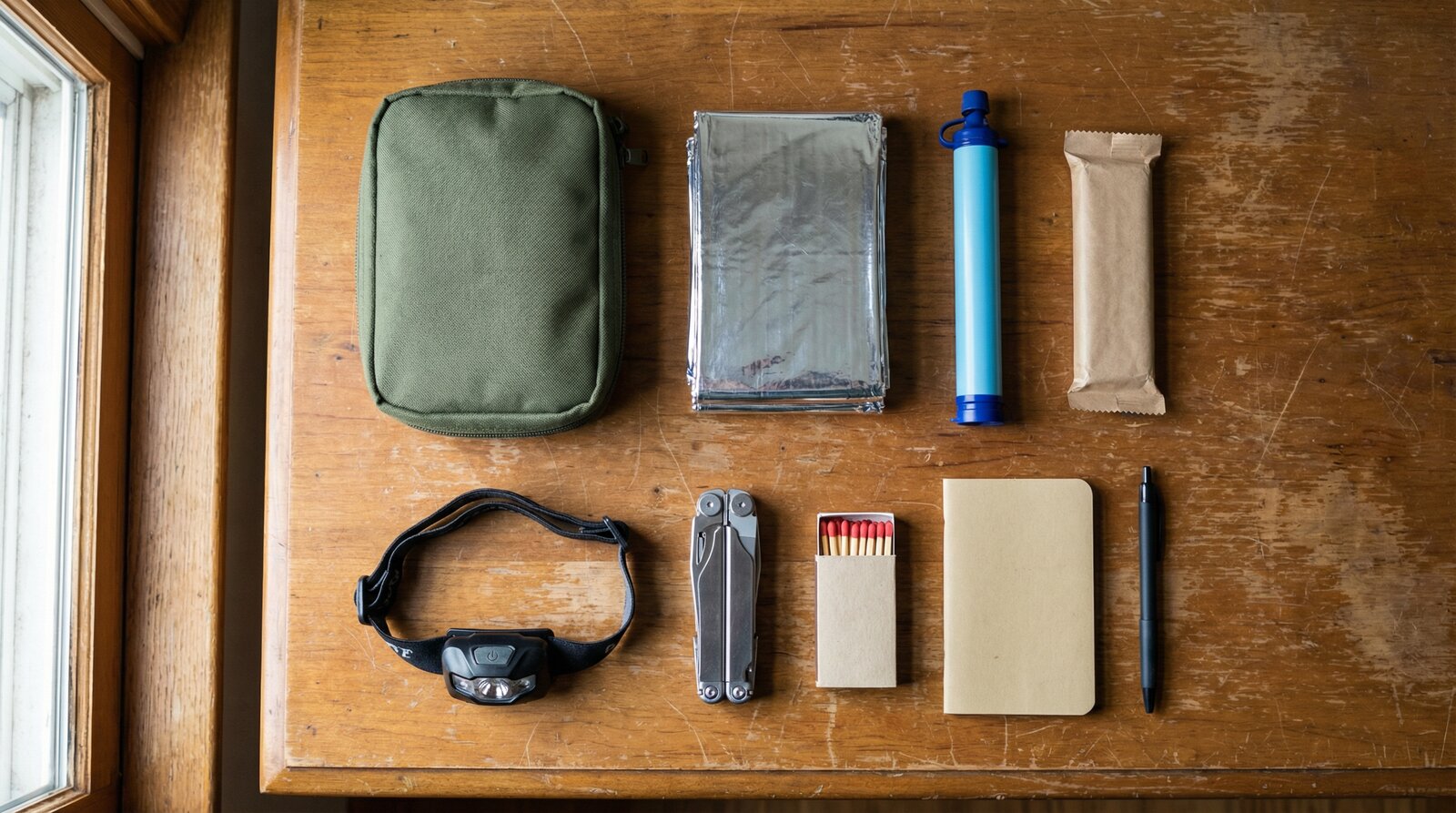
72-Hour Bag (Bug Out Bag): Designed to sustain one person for 72 hours away from home. Contents include water (or a filter), food (calorie-dense, no-cook options), shelter (emergency bivy or tarp), fire-starting tools, a first aid kit, a multi-tool, copies of critical documents, cash, and communication tools. One bag per person, sized and weighted appropriately for each family member.
Get-Home Bag: A lighter kit designed to help you get home from work or school if normal transportation isn’t available. Smaller than a bug-out bag — focused on water, a few energy bars, comfortable walking shoes, a map, and basic first aid. Keep it in your vehicle or workplace.
Vehicle Kit: Supports both the get-home and bug-out scenarios from your vehicle. Includes jumper cables, a tire repair kit, a shovel, traction aids, emergency food and water, blankets, and a first aid kit. Stored in the trunk, restocked seasonally.
Home Shelter-in-Place Kit: The most complete kit — essentially your full home preparedness supply. Food, water, medical supplies, tools, lighting, warmth, and communication gear. When bugging in is the right call, this is what you rely on.
For a detailed comparison of bag types and what belongs in each, see the guide to bug out bags vs. go bags vs. INCH bags.
Preparing Kids for Emergencies Without Creating Fear
Talking about emergencies with kids doesn’t have to be scary. Framed correctly, it builds confidence and competence — and it makes your whole family more resilient. The key is matching the conversation to the child’s developmental stage and focusing on capability rather than threat.
For younger kids (4–7): Keep it simple and positive. Teach your address and phone number. Practice what to do if there’s a fire (stop, drop, roll; get out; meet at the mailbox). Frame drills as games. Focus on the adults as protectors and problem-solvers.
For kids 8–12: Introduce more responsibility. Kids this age can learn to use a first aid kit, read a basic map, pack their own bug-out bag, and understand the family communication plan. Involve them in prep activities — they’re more engaged when they feel ownership.
Teenagers (13+): Teenagers can handle significant responsibility. They can manage younger siblings, execute parts of the evacuation plan independently, use a two-way radio, and learn basic survival and first aid skills. Treat them as junior partners in the preparedness plan.
Family drills: Running a drill twice a year — ideally in spring and fall when the seasons change — keeps the plan fresh and builds muscle memory. Make it as realistic as reasonable, debrief afterward, and adjust based on what you learn.
For a complete guide to age-appropriate preparedness education, see teaching kids emergency preparedness. Also review the children’s first aid kit checklist to make sure your kids have what they need.
Medical and Hygiene Preparedness
Medical and hygiene preparedness is where many families have the biggest gaps. When hospitals are overwhelmed or inaccessible, your household needs to be its own first line of care.
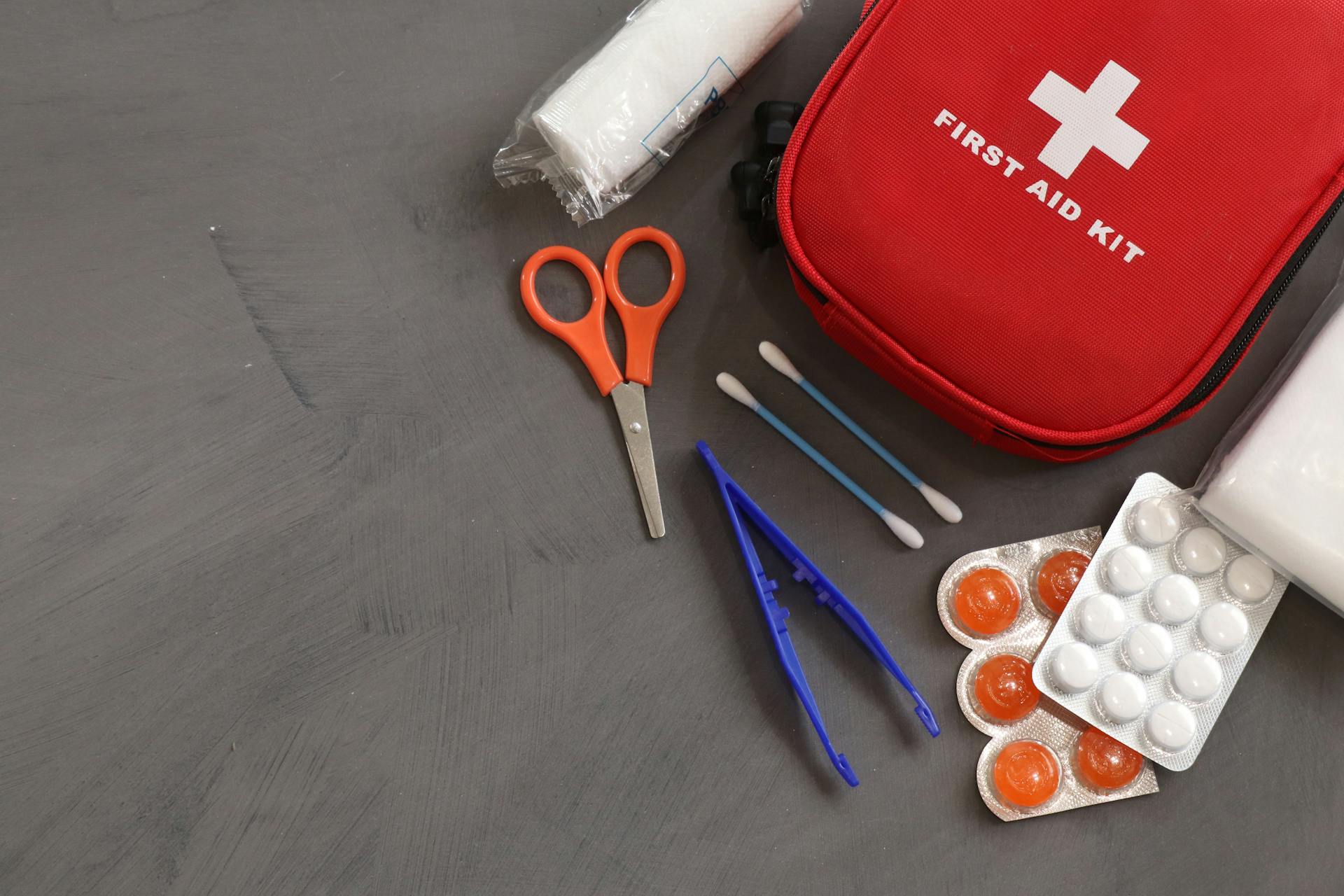
First aid kit essentials: Go beyond the basic drugstore kit. A complete home first aid kit should include tourniquets, hemostatic gauze, compression bandages, SAM splints, wound closure strips, a CPR mask, a blood pressure cuff, an oral thermometer, and a detailed first aid manual. Take a Stop the Bleed course and a basic first aid/CPR course — supplies without skills have limited value.
Prescription medications: One of the more challenging aspects of medical preparedness. Talk to your doctor or pharmacist about maintaining a 30-day buffer of any critical medications. Insurance limitations can make this difficult, but it’s worth pursuing. Know the generic equivalents and alternative sources for medications your family depends on.
Sanitation supplies: In a grid-down scenario where running water isn’t available, sanitation quickly becomes a serious health issue. Store a supply of hand sanitizer, disinfectant wipes, bleach, heavy-duty garbage bags, and a portable toilet option. Poor sanitation is a leading cause of illness in disaster situations — taking it seriously protects your family’s health.
For a complete list of hygiene supplies, see 14 hygiene supplies every prepper should stockpile. For natural and home remedy options, see the guide to home remedy supplies every prepper should have.
Emergency Preparedness by Disaster Type
The foundational preparations above cover most scenarios, but some disaster types call for specific additional planning. Here’s a brief overview of three common categories.
Weather emergencies (severe storms, tornadoes, hurricanes, winter storms, wildfires): The threat varies dramatically by region, so start with the disasters most likely in your area. Every household in a storm-prone area should have a weather radio, know the location of their nearest shelter, and have a plan for rapid evacuation if required. Wildfire and hurricane scenarios are among the most common triggers for true bug-out situations. See the full weather emergency preparedness guide for region-specific planning.
Power grid failures: Extended grid outages are increasingly common and can be among the most widespread disruptions. A multi-day outage affects heating, cooling, refrigeration, communications, fuel pumps, and medical equipment. Preparedness for grid failure overlaps heavily with the food, water, warmth, and communication foundations — which is why the four-foundation framework is a solid starting point.
Civil unrest: Urban civil unrest is typically localized and temporary, but it can disrupt supply chains, close roads, and affect local safety. The primary preparation is awareness — monitor local news and social media, avoid areas of active unrest, and have a plan for sheltering in place or evacuating if unrest reaches your neighborhood. See the civil unrest survival guide for families for specific guidance.
Frequently Asked Questions
What should be in a family emergency kit?
At minimum — three days of water (one gallon per person per day), three days of non-perishable food, a battery-powered or hand-crank weather radio, a flashlight and extra batteries, a first aid kit, a whistle, dust masks, plastic sheeting and duct tape, moist towelettes and garbage bags, a wrench or pliers to shut off utilities, a manual can opener, local maps, and a cell phone charger. For a complete 30-day home supply, expand each category to cover longer-term needs.
How much food should I store for emergencies?
Start with a two-week supply and work toward 30 days. A practical target is 2,000–2,500 calories per person per day. Focus on shelf-stable foods your family already eats — rice, beans, oats, canned goods, pasta, peanut butter, and cooking oil. Building incrementally (adding $25–50 extra per grocery trip) keeps costs manageable and avoids waste from unfamiliar foods.
How do I make a family emergency plan?
A family emergency plan has five components: (1) a meeting place near your home for quick evacuations; (2) a secondary meeting place further away if you can’t return home; (3) an out-of-area contact everyone knows how to reach; (4) a communication plan (texts when calls fail); and (5) an evacuation route with a primary and alternate path. Write it down, share it with everyone in the household, and practice it at least once a year.
What is a 72-hour kit?
A 72-hour kit (also called a bug-out bag or go bag) is a pre-packed bag with enough supplies to sustain one person for 72 hours away from home. The standard includes water or a water filter, calorie-dense food, emergency shelter (bivy, tarp, or emergency blanket), fire-starting tools, a first aid kit, a multi-tool, a flashlight, copies of critical documents, and cash. The 72-hour window is based on the assumption that most emergency situations either resolve or stabilize within three days.
How do I prepare my kids for emergencies?
Start with age-appropriate conversations that focus on capability, not fear. Young children (4–7) should know their address, parents’ phone numbers, and what to do in a fire. Older children (8–12) can learn first aid basics, pack their own go bag, and understand the family communication plan. Teenagers can take on significant responsibility, including managing younger siblings and executing parts of the evacuation plan. Family drills — done twice a year and framed positively — build the muscle memory that makes plans actually work.
Building Your Preparedness System — Start Today
The family emergency preparedness framework isn’t something you complete in a weekend. It’s a system you build over time — adding supplies, refining your plan, building skills, and running drills until preparedness is simply part of how your household operates.
Start with one foundation. If your water storage is at zero, that’s your priority this week. If you’ve got food and water but no evacuation plan, that’s your next project. Incremental progress compounds. A family that’s 80% prepared handles the same emergency dramatically better than one that’s starting from scratch.
Homesteading and emergency preparedness aren’t separate pursuits — they’re expressions of the same underlying value: the ability to take care of your family regardless of what external systems do. That’s worth building.
Ready to go deeper? Visit our start here page for the complete homesteader’s roadmap.
Related posts:
Build Your Family Emergency Plan
The complete system: food storage, water prep, 72-hour kits, evacuation routes, and how to prep your kids. Free PDF for homestead families.
The 72-Hour Checklist Most Families Are Missing
Food, water, power, communications, and family coordination — in a single printable checklist. Free PDF.